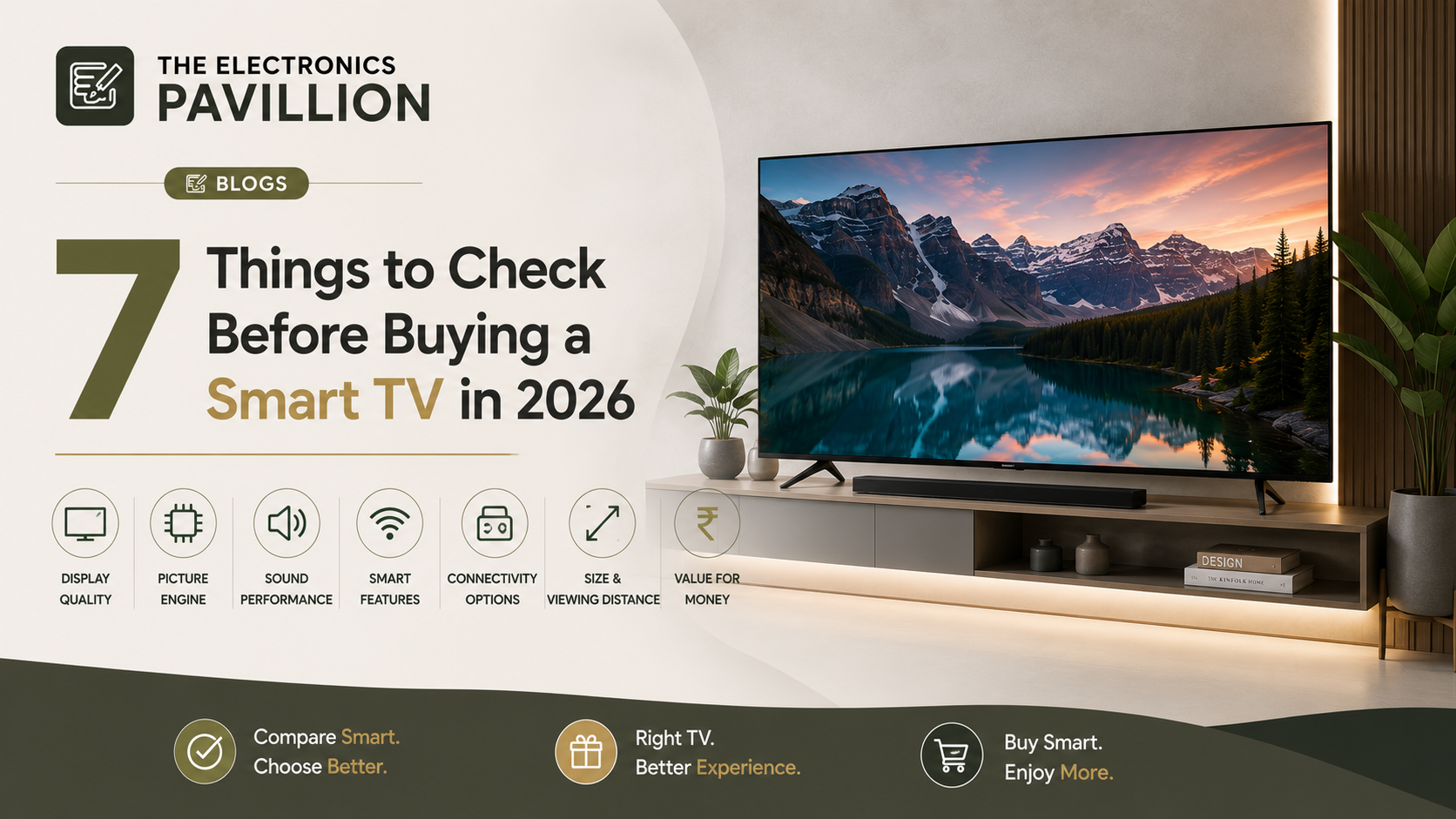
Smart TV buying guide searches continue to grow as consumers look for the best television to match their entertainment needs, budget, and lifestyle. With hundreds of models offering different screen technologies, operating systems, gaming features, and streaming capabilities, choosing the right Smart TV can quickly become overwhelming. Understanding the key features before making a purchase helps you invest in a television that delivers excellent picture quality, long-term performance, and a better viewing experience.
Whether you're upgrading your living room setup or buying your first Smart TV, these seven factors should be at the top of your checklist.
1. Choose the Right Screen Size for Your Space
Smart TV buying guide advice often begins with screen size because it directly affects your viewing experience. Bigger isn't always better—the ideal size depends on the room dimensions and the distance between your seating area and the TV.
General recommendations include:
-
43–50 inches: Small bedrooms or apartments
-
55–65 inches: Average living rooms
-
75 inches and above: Large family rooms or home theaters
Selecting the right screen size helps ensure comfortable viewing without compromising image clarity.
2. Understand Display Technologies
Modern Smart TVs are available with several display technologies, each offering different advantages.
LED TVs
-
Budget-friendly
-
Bright picture quality
-
Widely available
-
Suitable for everyday viewing
QLED TVs
-
Higher brightness
-
Richer color accuracy
-
Better performance in bright rooms
-
Excellent HDR support
OLED TVs
-
Perfect black levels
-
Outstanding contrast
-
Wide viewing angles
-
Premium cinematic experience
Comparing these technologies will help you choose a TV that matches your viewing habits and budget.
3. Check the Resolution
Resolution determines how sharp and detailed your picture appears.
Common options include:
-
Full HD (1080p)
-
4K Ultra HD
-
8K Ultra HD
For most households in 2026, a 4K Smart TV offers the best balance between picture quality, content availability, and value for money.
If you plan to keep your television for many years, choosing a higher-resolution display can provide better long-term value.
4. Evaluate the Smart TV Operating System
The operating system controls how you access apps, streaming services, and settings.
A good Smart TV platform should provide:
-
Easy navigation
-
Fast performance
-
Regular software updates
-
Voice assistant compatibility
-
Wide app selection
-
Personalized recommendations
A smooth user interface can significantly improve your everyday viewing experience.
5. Look for Gaming Features
Gaming has become an important consideration for many Smart TV buyers.
If you own a modern gaming console, look for features such as:
-
HDMI 2.1 ports
-
Variable Refresh Rate (VRR)
-
Auto Low Latency Mode (ALLM)
-
120Hz refresh rate
-
Low input lag
-
HDR gaming support
These features help deliver smoother gameplay and more responsive performance.
6. Review Connectivity Options
Your Smart TV should easily connect with all of your entertainment devices.
Useful connectivity options include:
-
Multiple HDMI ports
-
USB ports
-
Wi-Fi
-
Bluetooth
-
Ethernet connection
-
Optical audio output
-
Screen mirroring support
Having sufficient ports ensures flexibility for soundbars, gaming consoles, streaming devices, and Blu-ray players.
7. Consider Audio Quality
While picture quality receives most of the attention, sound quality is equally important.
Look for TVs that offer:
-
Dolby Atmos compatibility
-
Clear dialogue enhancement
-
Virtual surround sound
-
AI sound optimization
-
eARC support for external sound systems
If you enjoy movies or sports, pairing your Smart TV with a quality soundbar can create a much more immersive experience.
Additional Features Worth Considering
Depending on your budget, you may also want to look for:
-
HDR10+ support
-
Dolby Vision
-
Voice control
-
Smart home integration
-
Ambient display modes
-
AI-powered picture optimization
-
Energy-saving features
-
Slim bezel design
These extras can improve convenience and enhance the overall user experience.
Common Mistakes to Avoid
Many buyers focus only on price and overlook important long-term considerations.
Avoid these common mistakes:
-
Buying a TV that's too large for the room
-
Ignoring refresh rate specifications
-
Choosing limited connectivity options
-
Overlooking software update support
-
Purchasing based only on brand reputation
-
Forgetting to consider audio performance
Taking time to compare specifications can help you avoid buyer's remorse.
How to Choose the Best Smart TV for Your Needs
The best Smart TV isn't necessarily the most expensive one—it's the one that fits your viewing habits and lifestyle.
Before purchasing, ask yourself:
-
What size fits my room?
-
Do I watch mostly movies or sports?
-
Will I use it for gaming?
-
Which streaming services do I use?
-
Do I need advanced HDR support?
-
Will I connect external speakers?
Answering these questions makes comparing different models much easier.
Find the Right Smart TV at The Electronics Pavillion
At The Electronics Pavillion, shoppers can explore a wide selection of Smart TVs from leading brands, compare features, and find models suited to different budgets and entertainment needs.
Whether you're looking for a compact bedroom TV, a premium OLED display, or a feature-packed 4K television for family movie nights, choosing the right model starts with understanding what features matter most.
Conclusion
Smart TV buying guide research is one of the best ways to make a confident purchase in 2026. By evaluating screen size, display technology, resolution, operating system, gaming performance, connectivity, and audio quality, you can choose a television that meets both your current needs and future expectations.
Rather than focusing only on price, compare the overall value, features, and long-term usability. A well-informed decision ensures you'll enjoy your Smart TV for years to come.
Frequently Asked Questions
1. What is the most important thing to consider when buying a Smart TV?
Screen size, display technology, resolution, and the Smart TV operating system are among the most important factors to evaluate before making a purchase.
2. Is OLED better than QLED?
Both offer excellent picture quality. OLED provides deeper blacks and superior contrast, while QLED delivers higher brightness and performs particularly well in brightly lit rooms.
3. Is a 4K Smart TV worth buying in 2026?
Yes. A 4K Smart TV offers excellent picture quality, broad content availability, and represents the best value for most households.
4. How many HDMI ports should a Smart TV have?
Most buyers benefit from at least three or four HDMI ports, especially if they plan to connect gaming consoles, streaming devices, and audio systems.
5. Which Smart TV features are best for gaming?
Look for HDMI 2.1, Variable Refresh Rate (VRR), Auto Low Latency Mode (ALLM), 120Hz refresh rate, and low input lag for the best gaming experience.
6. How do I choose the right Smart TV size?
The ideal screen size depends on your room dimensions and viewing distance. Larger rooms generally accommodate 65-inch or larger TVs, while smaller spaces may be better suited to 43–55-inch models.
7. Where can I compare Smart TVs before buying?
Comparing specifications, display technologies, connectivity options, and user requirements through a trusted electronics retailer like The Electronics Pavillion can help you choose the right Smart TV for your home and budget.