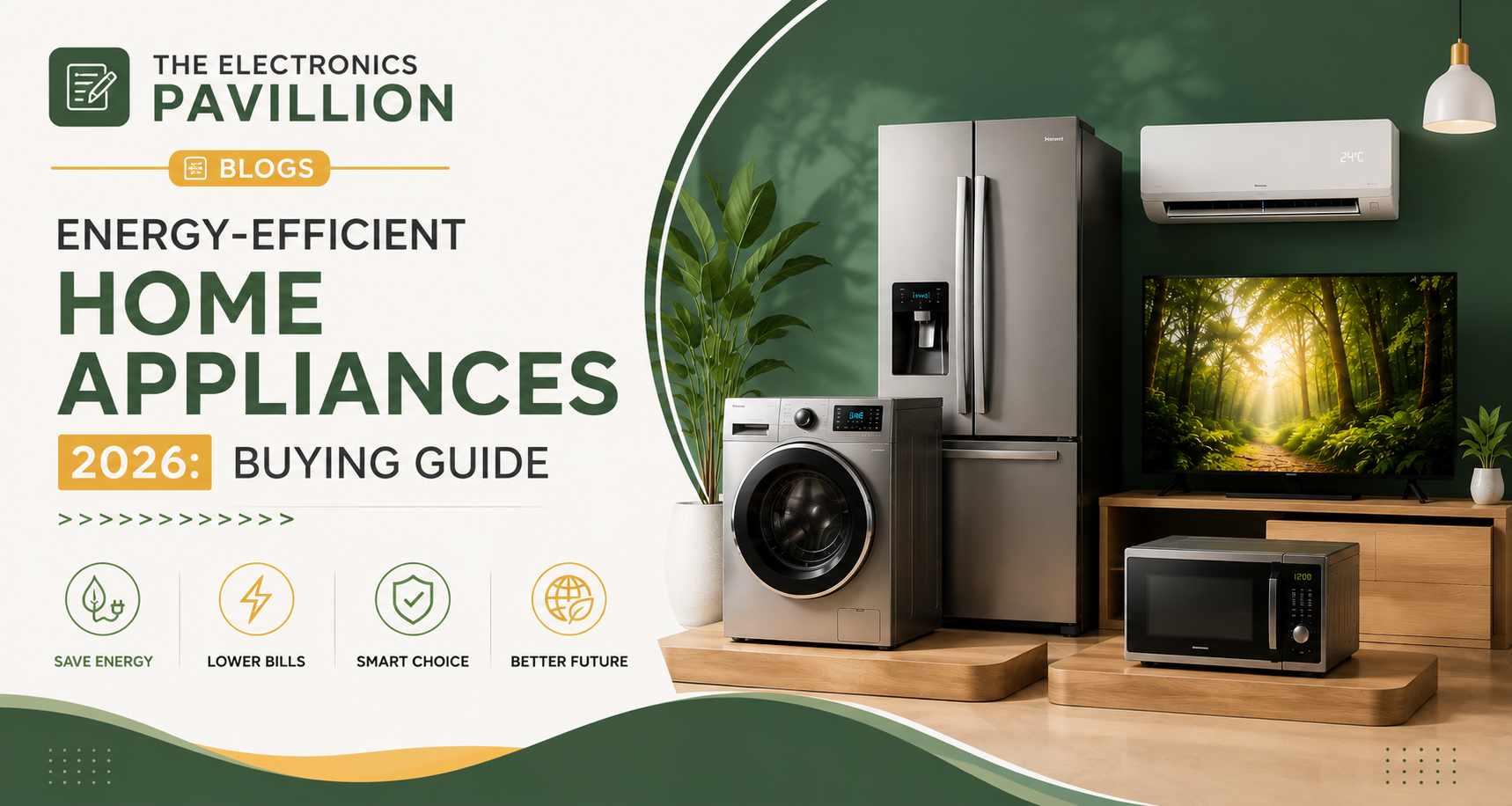
Energy-efficient appliances have become the smartest way for Indian households to control rising electricity bills while enjoying the comfort of modern technology. As power tariffs climb across Delhi NCR and summer temperatures push air conditioners and refrigerators to run longer hours, choosing the right appliance is no longer just about features — it's about long-term savings. This guide walks you through everything you need to know before buying electricity-saving appliances in 2026, from understanding BEE star ratings to picking the right AC, refrigerator, or washing machine for your home.
Why Energy Efficiency Matters More Than Ever
Energy-efficient home appliances consume less electricity to deliver the same output as older, conventional models. A 5-star rated air conditioner, for instance, can use up to 40% less power than a 1-star model of the same capacity, translating into real savings on your monthly bill. With electricity tariffs in Delhi and Haryana rising steadily, an upfront investment in a power-saving appliance often pays for itself within two to three years through reduced running costs.
Beyond the financial angle, low power consumption appliances also reduce the strain on the electricity grid and lower your household's carbon footprint. For families upgrading their kitchen or living room this year, this makes energy efficiency a practical, wallet-friendly, and environmentally responsible choice.
Understanding BEE Star Ratings Before You Buy
The Bureau of Energy Efficiency (BEE) star rating is the single most reliable indicator of how much electricity an appliance will consume. Ratings range from 1 star to 5 stars, with 5-star appliances being the most efficient in their category.
A few things to keep in mind:
-
Higher stars mean lower running costs, but usually a slightly higher purchase price.
-
Ratings are recalibrated periodically, so a 5-star model from a few years ago may only qualify as 3-star today. Always check the current BEE label year on the product.
-
Ratings differ by appliance type — a 5-star refrigerator and a 5-star washing machine are measured on completely different scales, so compare only within the same category.
Shoppers looking for genuine, BEE-certified electricity saving appliances can browse verified options across air conditioners, refrigerators, and washing machines from trusted brands like LG, Daikin, Voltas, Whirlpool, and IFB.
Energy-Efficient Air Conditioners: Inverter Technology Leads the Way
Air conditioners are typically the single biggest contributor to household power bills, especially during Delhi's long summer months. Modern inverter ACs solve this problem by adjusting compressor speed based on room temperature instead of switching the compressor fully on and off, which is how older fixed-speed units work.
Key features to look for in an energy-saving AC:
-
5-star inverter compressor for the lowest possible running cost
-
Dual-inverter or triple-inverter technology for faster cooling with less power draw
-
Copper condenser coils that improve cooling efficiency over the appliance's lifetime
-
Smart/Wi-Fi controls that let you schedule cooling and avoid unnecessary usage
Brands such as Daikin, Voltas, LG, Hitachi, and O General offer strong lineups of 5-star inverter split ACs suited to Delhi's climate.
Refrigerators That Save Power Around the Clock
Unlike an AC that runs seasonally, a refrigerator operates 24 hours a day, every day of the year — making its efficiency rating one of the most important numbers on your electricity bill. Energy-efficient refrigerators use inverter compressors, better insulation, and smarter cooling cycles to maintain temperature with minimal power draw.
When comparing electricity saving appliances in this category, prioritize:
-
Inverter compressor technology, which reduces power spikes and noise
-
Frost-free models with smart defrost cycles, which use less energy than manual-defrost units over time
-
Adequate capacity for your family size, since an oversized or undersized fridge both waste energy
Explore energy-rated refrigerators from LG, Samsung, Haier, and Whirlpool in The Electronics Pavillion's refrigerator collection.
Washing Machines: Water and Power Efficiency Go Together
Washing machines with high star ratings don't just save electricity — many also reduce water consumption, which matters in cities facing water stress. Front-load washing machines are generally more energy and water efficient than top-load models because they use gravity and tumbling action rather than a full water-filled drum.
Look for:
-
5-star BEE rating on both energy and water consumption
-
Inverter motors, which adjust drum speed and reduce power usage per wash cycle
-
Half-load or eco-wash modes for smaller loads
IFB, Bosch, LG, and Samsung all manufacture efficient washing machines that balance performance with lower utility bills.
Kitchen and Small Appliances That Add Up
While ACs, refrigerators, and washing machines dominate the conversation, smaller kitchen appliances also contribute to your overall electricity consumption. Energy-conscious households should also evaluate:
-
Kitchen chimneys and hobs with efficient motors that clear smoke faster using less power
-
Microwaves and ovens with inverter technology for even heating at lower wattage
-
Water purifiers with low standby power consumption
-
LED and OLED TVs, which use significantly less electricity than older LCD or plasma screens for the same screen size
Browsing categories like kitchen appliances and LED TVs can help you compare wattage and star ratings side by side before purchase.
Practical Tips to Maximize Appliance Efficiency at Home
Buying an energy-efficient appliance is only half the equation — how you use it matters just as much:
-
Service ACs and refrigerators regularly so dust and clogged filters don't force the compressor to work harder.
-
Set AC temperature between 24–26°C instead of running it at the coldest setting, which uses noticeably more power.
-
Run washing machines and dishwashers with full loads rather than multiple half-loads.
-
Unplug appliances on standby, since many electronics still draw small amounts of power even when switched off.
-
Replace appliances older than 10 years, as efficiency technology has improved dramatically over the last decade.
Making the Right Investment
Choosing energy-efficient home appliances is one of the smartest upgrades a household can make in 2026. The right combination of a 5-star inverter AC, an efficient refrigerator, and a water-saving washing machine can meaningfully lower your monthly electricity bill while improving day-to-day comfort. For buyers in Delhi NCR, visiting a showroom to compare wattage labels, inverter technology, and BEE ratings in person remains the most reliable way to make a confident, long-term purchase decision. The Electronics Pavillion's showrooms across Preet Vihar, Jail Road, Mahaveer Enclave, and Rewari offer hands-on comparisons of genuine, manufacturer-warrantied appliances from all major brands.
Frequently Asked Questions
1. What does a 5-star BEE rating actually mean?
A 5-star BEE rating means the appliance falls in the most efficient tier of its category, consuming the least electricity to deliver its rated performance compared to 1-star through 4-star models of the same type and capacity.
2. Are energy-efficient appliances more expensive to buy?
Generally yes, energy-efficient appliances carry a slightly higher upfront price than lower-rated models, but the difference is usually recovered within two to three years through reduced electricity bills, especially for appliances like ACs and refrigerators that run for long hours.
3. Do inverter ACs really save more electricity than non-inverter ACs?
Yes, inverter ACs adjust compressor speed continuously instead of turning fully on and off, which reduces power spikes and overall consumption, often saving 20–30% more electricity than a comparable non-inverter unit.
4. How often should I replace old appliances for better energy savings?
Most experts recommend reviewing appliances older than 8–10 years, since energy efficiency technology has advanced significantly, and older units often consume far more power than their modern equivalents.
5. Does BEE star rating apply the same way to every appliance type?
No, star ratings are specific to each appliance category. A 5-star refrigerator and a 5-star washing machine are tested on different consumption benchmarks, so ratings should only be compared within the same appliance type.
6. Where can I buy genuine energy-efficient appliances in Delhi NCR?
The Electronics Pavillion offers BEE-certified, manufacturer-warrantied energy-efficient appliances from LG, Samsung, Daikin, Voltas, Bosch, IFB, Haier, and Whirlpool, with showrooms across Preet Vihar, Jail Road, Mahaveer Enclave, and Rewari, plus fast delivery across Delhi NCR.