Introduction
Inverter vs non-inverter AC is one of the most common comparisons homeowners make before buying a new air conditioner. While both types are designed to cool your home effectively, they operate differently and can have a significant impact on your electricity bills over time. If you're looking for an energy-efficient AC, understanding the differences between these technologies can help you make a smarter long-term investment.
Although inverter ACs usually have a higher upfront cost, many homeowners choose them because of their lower energy consumption, quieter operation, and improved temperature control. Let's explore how they compare and determine which option offers the best value for your needs.
What Is an Inverter AC?
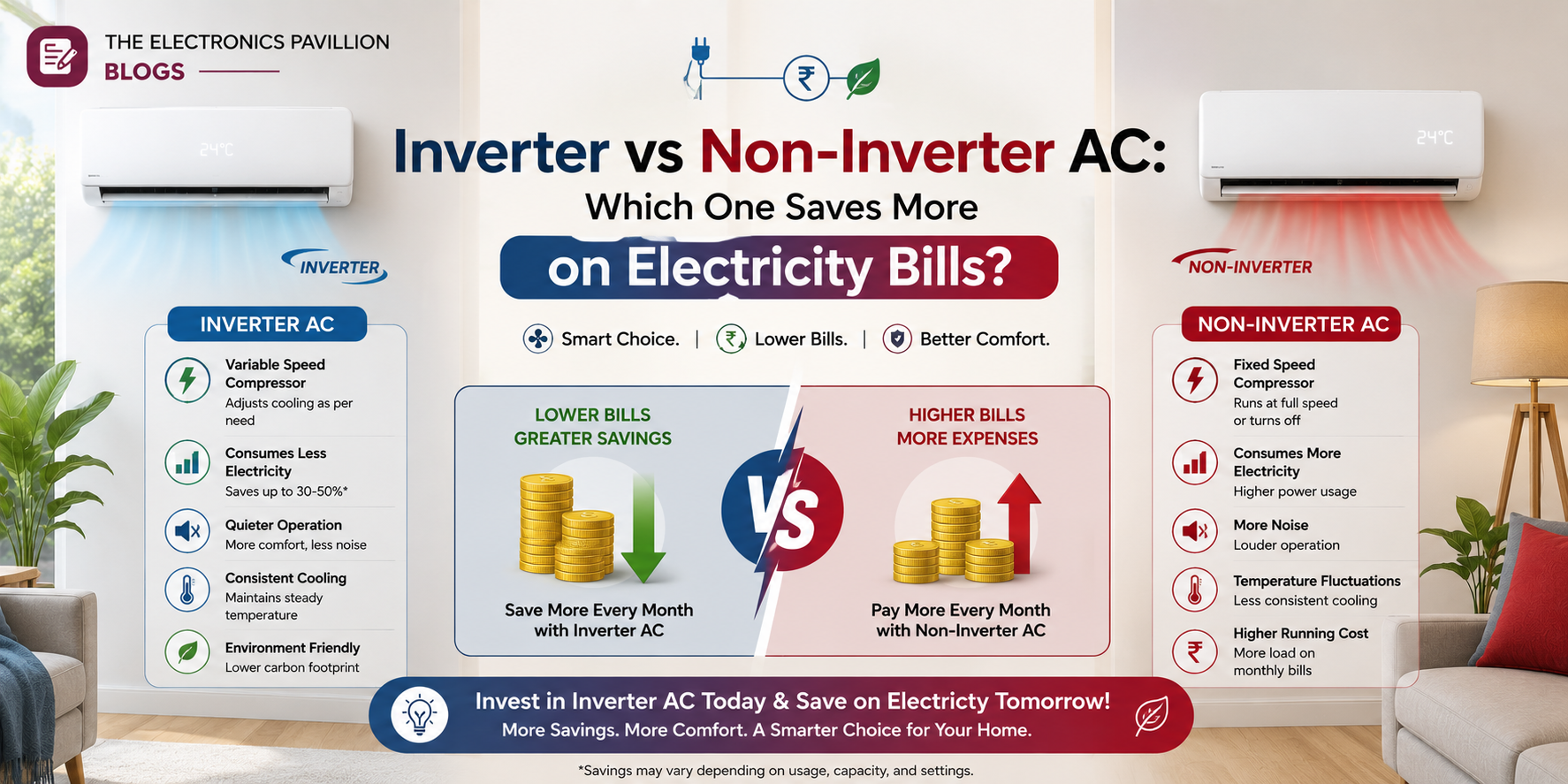
Inverter AC technology uses a variable-speed compressor that adjusts its operating speed based on the room's cooling requirements. Instead of constantly turning the compressor on and off, it continuously regulates its power output to maintain the desired temperature.
Key characteristics include:
-
Variable compressor speed
-
Consistent room temperature
-
Lower electricity consumption
-
Quieter operation
-
Reduced wear on components
-
Improved long-term efficiency
This intelligent operation makes inverter ACs one of the most energy-efficient cooling solutions available today.
What Is a Non-Inverter AC?
A non-inverter AC uses a fixed-speed compressor. Once the desired temperature is reached, the compressor shuts off completely. When the room warms up again, it restarts at full power.
Features include:
-
Fixed compressor speed
-
Lower purchase price
-
Simpler technology
-
Higher energy consumption during continuous use
-
Frequent compressor cycling
Although non-inverter models remain popular for their affordability, they generally consume more electricity over time.
Inverter vs Non-Inverter AC: Key Differences
|
Feature |
Inverter AC |
Non-Inverter AC |
|
Compressor |
Variable Speed |
Fixed Speed |
|
Electricity Consumption |
Lower |
Higher |
|
Cooling Performance |
Consistent |
Starts and Stops Frequently |
|
Noise Level |
Quieter |
Louder |
|
Initial Cost |
Higher |
Lower |
|
Long-Term Running Cost |
Lower |
Higher |
|
Temperature Control |
More Stable |
Less Consistent |
|
Energy Efficiency |
Excellent |
Moderate |
The right choice depends on how often you use your air conditioner and your long-term energy-saving goals.
Which AC Uses Less Electricity?
Inverter vs non-inverter AC comparisons consistently show that inverter models use less electricity under normal operating conditions.
This is because:
-
The compressor doesn't repeatedly restart.
-
Power consumption adjusts automatically.
-
Less energy is wasted maintaining the desired temperature.
-
Cooling remains stable without large fluctuations.
For households that use air conditioning daily, these efficiency improvements can result in noticeable savings on electricity bills over time.
Why Inverter ACs Are More Energy Efficient
Several factors contribute to the superior efficiency of inverter technology.
These include:
-
Smart compressor speed control
-
Reduced startup power consumption
-
Continuous temperature regulation
-
Improved cooling performance
-
Better efficiency during extended operation
These features help reduce overall energy usage while maintaining a comfortable indoor environment.
When a Non-Inverter AC May Still Be a Good Choice
Despite higher electricity consumption, non-inverter ACs may still suit certain situations.
They can be a practical option if:
-
You use the AC only occasionally.
-
Your budget is limited.
-
Cooling is required for short periods.
-
The room is used infrequently.
-
Initial purchase cost is your main priority.
For occasional use, the lower purchase price may outweigh long-term energy savings.
Other Factors That Affect Electricity Bills
Choosing an inverter AC is only part of improving energy efficiency.
Other important factors include:
AC Capacity
Selecting the correct cooling capacity for your room prevents unnecessary energy consumption.
Energy Rating
Higher energy-rated models generally consume less electricity over their lifetime.
Room Insulation
Well-insulated rooms retain cool air longer, reducing compressor workload.
Climate
Hotter regions require longer cooling cycles, making inverter technology even more beneficial.
Maintenance
Regular filter cleaning and professional servicing help maintain peak efficiency.
How to Choose the Best Energy-Efficient AC
When comparing different air conditioners, consider:
-
Room size
-
Cooling capacity
-
Energy efficiency rating
-
Compressor technology
-
Noise level
-
Smart features
-
Warranty coverage
-
Brand reliability
-
Installation requirements
Looking beyond the purchase price helps identify the model that offers the best long-term value.
Is an Inverter AC Worth the Higher Price?
Many buyers hesitate because inverter ACs cost more initially.
However, if you:
-
Use your AC frequently
-
Live in a warm climate
-
Plan to keep the unit for several years
-
Want lower electricity bills
-
Prefer quieter operation
…the higher purchase price may be offset by lower operating costs over time.
Find the Right Air Conditioner at The Electronics Pavillion
At The Electronics Pavillion, customers can explore a wide range of inverter and non-inverter air conditioners from trusted brands. Comparing cooling capacity, energy ratings, smart features, and operating costs makes it easier to choose an AC that matches your home's cooling requirements and budget.
Whether you're replacing an older unit or buying your first air conditioner, selecting the right model can improve comfort while helping reduce long-term electricity expenses.
Conclusion
Inverter vs non-inverter AC is ultimately a choice between lower upfront cost and greater long-term efficiency. While non-inverter models remain a budget-friendly option for occasional use, inverter air conditioners generally provide lower electricity consumption, quieter performance, and more consistent cooling.
If reducing your monthly electricity bills and improving energy efficiency are priorities, investing in an inverter AC can be a smart decision. Before purchasing, compare cooling capacity, energy ratings, and room requirements to ensure you choose the best model for your home.
Frequently Asked Questions
1. Which is better: inverter or non-inverter AC?
Inverter ACs are generally better for regular use because they offer improved energy efficiency, quieter operation, and more consistent cooling. Non-inverter ACs may be suitable for occasional use and smaller budgets.
2. Does an inverter AC really save electricity?
Yes. Inverter ACs adjust compressor speed according to cooling demand, helping reduce electricity consumption compared to traditional fixed-speed air conditioners.
3. Is an inverter AC worth the extra cost?
If you use your air conditioner frequently, the lower running costs and improved energy efficiency can help offset the higher purchase price over time.
4. Why does a non-inverter AC use more electricity?
A non-inverter AC repeatedly switches its compressor on and off, consuming more power during each startup and resulting in higher overall energy usage.
5. How do I choose the right AC capacity?
The ideal capacity depends on your room size, ceiling height, insulation, climate, and sun exposure. Choosing the correct size improves cooling performance and energy efficiency.
6. What should I check before buying an air conditioner?
Consider compressor technology, energy efficiency rating, cooling capacity, warranty, noise level, smart features, installation requirements, and long-term operating costs.
7. Where can I compare inverter and non-inverter AC models?
The Electronics Pavillion offers a selection of inverter and non-inverter air conditioners from leading brands, making it easier to compare features, energy efficiency, and pricing before making a purchase.