
Introduction
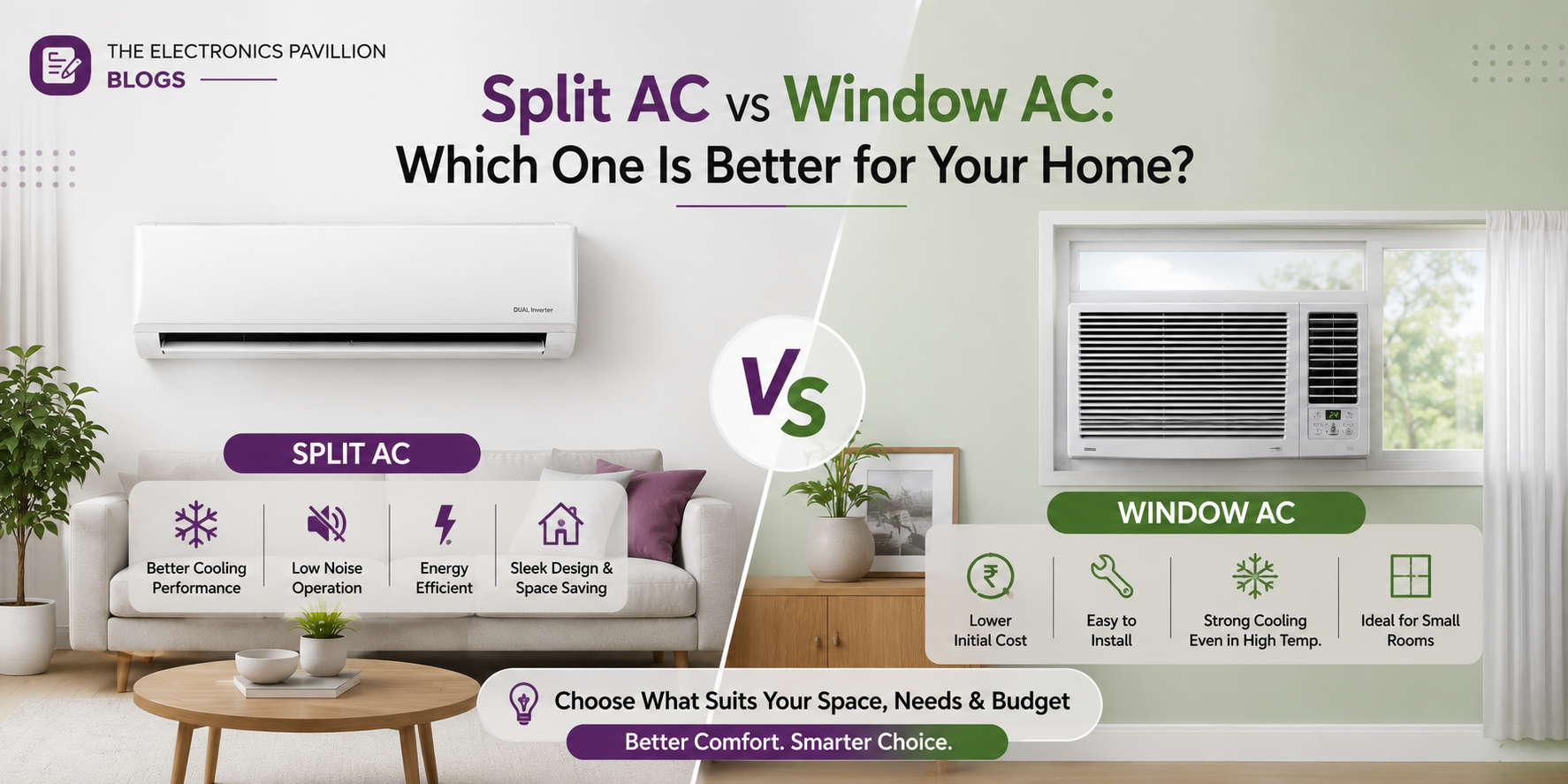
Split AC vs Window AC is one of the most common comparisons homeowners make when purchasing a new air conditioner. Both options are designed to cool indoor spaces effectively, but they differ significantly in terms of installation, energy efficiency, aesthetics, noise levels, and overall performance.
Choosing the right air conditioner depends on your room size, budget, cooling requirements, and long-term energy-saving goals. Understanding the differences between these two popular AC types can help you make a more informed decision and avoid costly mistakes.
In this guide, we'll compare Split ACs and Window ACs across several important factors to help you determine which option is best for your home.
What Is a Split AC?
Split AC vs Window AC comparisons often begin with understanding how each system works.
A Split AC consists of two separate units:
-
Indoor unit
-
Outdoor compressor unit
The indoor unit is mounted inside the room, while the compressor is installed outside the building. Both units are connected through copper piping and electrical wiring.

Advantages of Split ACs
-
Modern and stylish appearance
-
Quiet operation
-
Better cooling performance
-
Energy-efficient inverter technology
-
Suitable for larger rooms
Disadvantages of Split ACs
-
Higher initial cost
-
Professional installation required
-
More expensive maintenance
What Is a Window AC?
Split AC vs Window AC discussions also involve understanding the simplicity of Window AC systems.
A Window AC combines all components into a single unit that is installed through a window opening or wall slot.

Advantages of Window ACs
-
Lower purchase cost
-
Easier installation
-
Lower maintenance expenses
-
Ideal for small rooms
Disadvantages of Window ACs
-
Higher noise levels
-
Less attractive appearance
-
Limited cooling coverage
-
Fewer advanced features
Split AC vs Window AC: Cooling Performance
Split AC vs Window AC cooling performance is one of the biggest deciding factors for buyers.
Split ACs generally provide:
-
Faster cooling
-
Better air distribution
-
Consistent room temperature
-
Improved comfort in larger spaces
Window ACs are effective for:
-
Small bedrooms
-
Home offices
-
Single-room cooling
For larger spaces, Split ACs usually deliver superior performance.
Split AC vs Window AC: Energy Efficiency
Split AC vs Window AC energy efficiency plays an important role in long-term operating costs.
Modern Split ACs often include inverter technology that adjusts compressor speed according to cooling demand.
Benefits include:
-
Lower electricity consumption
-
Better temperature control
-
Reduced energy wastage
Window ACs can also be energy efficient, but many models consume more electricity compared to inverter-based Split ACs.
If reducing electricity bills is a priority, a modern Split AC may be the better investment.
Split AC vs Window AC: Installation Costs
Split AC vs Window AC installation requirements differ significantly.
Split AC Installation
Requires:
-
Indoor and outdoor unit placement
-
Copper piping
-
Electrical connections
-
Professional installation
Installation costs are generally higher.
Window AC Installation
Requires:
-
Window opening or wall slot
-
Minimal setup
Installation is simpler and usually more affordable.
Split AC vs Window AC: Noise Levels
Split AC vs Window AC noise comparison often favors Split AC systems.
Since the compressor is installed outside the room, Split ACs operate much more quietly.
Window ACs contain all components within a single unit, making them noticeably louder during operation.
For bedrooms and study rooms, quieter cooling can significantly improve comfort.
Split AC vs Window AC: Appearance and Design
Split AC vs Window AC aesthetics matter for modern homes.
Split ACs offer:
-
Sleek design
-
Space-saving installation
-
Better interior appearance
Window ACs are more visible and may affect the overall look of a room.
Homeowners focused on interior design often prefer Split AC systems.
Split AC vs Window AC: Maintenance Requirements
Split AC vs Window AC maintenance costs vary based on system complexity.
Split ACs require:
-
Periodic servicing
-
Filter cleaning
-
Professional maintenance
Window ACs typically have:
-
Easier access
-
Simpler servicing
-
Lower maintenance costs
Regular servicing remains important for both systems to ensure efficient performance.
Which AC Is Best for Your Home?
Split AC vs Window AC ultimately depends on your specific needs.
Choose a Split AC if:
-
You need cooling for a medium or large room
-
Energy efficiency is important
-
You want quieter operation
-
Modern design matters
Choose a Window AC if:
-
You have a limited budget
-
You need cooling for a small room
-
Easy installation is a priority
-
You want lower upfront costs
Final Verdict
Split AC vs Window AC is not about which option is universally better—it's about choosing the solution that best fits your home and lifestyle.
For homeowners seeking advanced features, lower electricity consumption, and superior comfort, a Split AC is often the preferred choice. For those looking for a cost-effective cooling solution for smaller spaces, a Window AC remains a practical option.
By considering room size, budget, energy efficiency, and installation requirements, you can confidently choose the right air conditioner for your home.
Frequently Asked Questions
Is a Split AC better than a Window AC?
Split ACs generally offer better cooling performance, quieter operation, and improved energy efficiency compared to Window ACs.
Which AC consumes less electricity?
Modern inverter Split ACs usually consume less electricity than traditional Window AC models.
Are Window ACs cheaper than Split ACs?
Yes. Window ACs typically have lower purchase and installation costs.
Which AC is easier to maintain?
Window ACs are generally easier and less expensive to maintain.
Which AC is best for a small bedroom?
A Window AC or a 1 Ton Split AC can both work well depending on the room size and budget.
Which AC lasts longer?
Both systems can last many years when properly maintained, though overall lifespan depends on usage and servicing.